
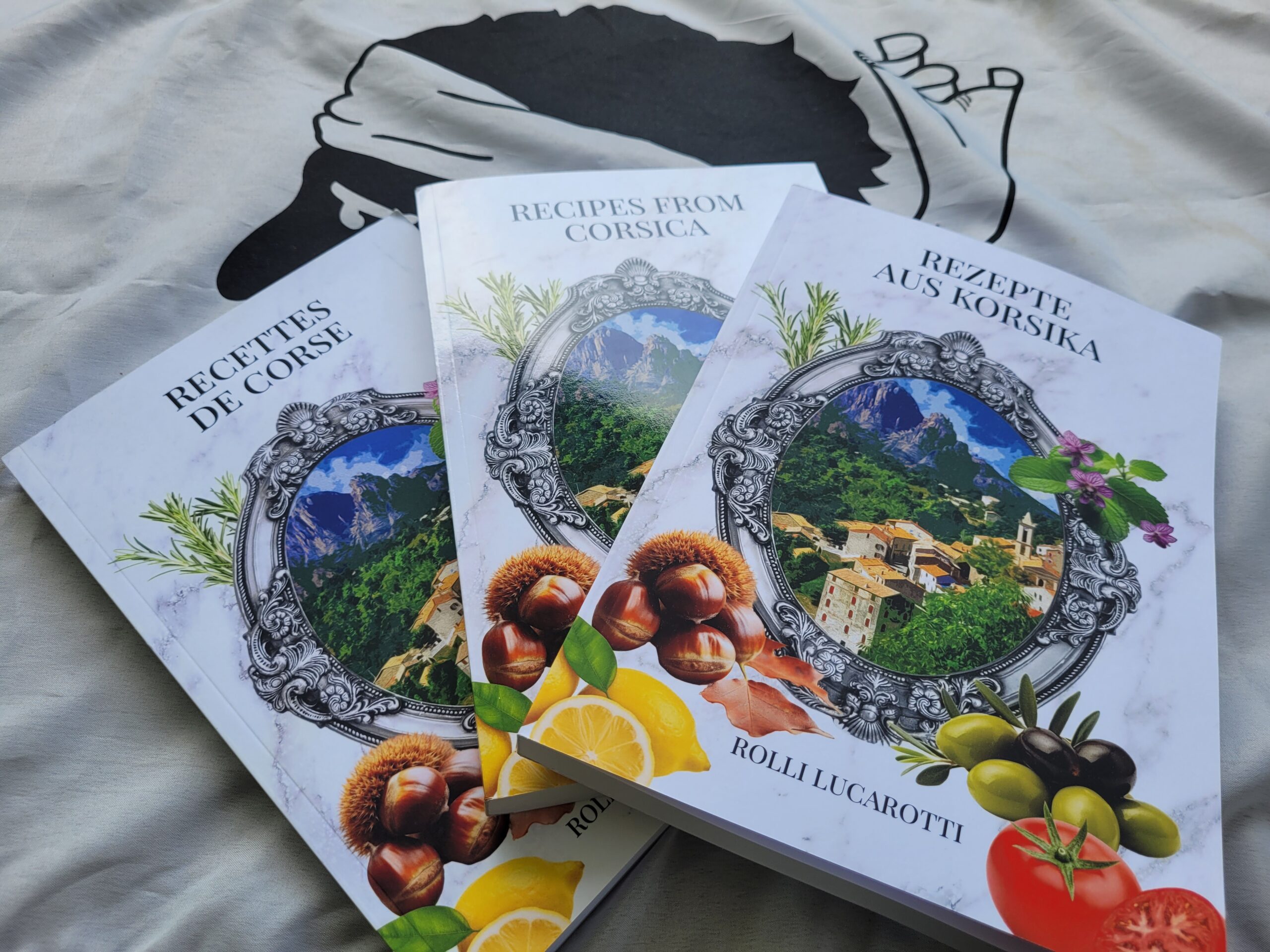
Recipes from Corsica is a book containing over 200 Traditional Corsican Recipes. The book is available in English, French and German.
It can be purchased on Amazon and soon in bookstores all over the world.
To buy your own copy follow this link.
Corsica’s cuisine is inseparable from its rugged geography and layered history. The island’s mountainous interior and Mediterranean coastline have produced two distinct culinary traditions: hearty, pastoral dishes inland and lighter, seafood-based fare along the coast.
Influences from Tuscany, Genoa, and France have left their mark, but Corsican cooking remains rooted in local ingredients that speak to survival, identity, and pride.
Chestnuts: The Lifeblood of Corsican Diet
Perhaps no ingredient defines Corsican cooking more than the chestnut. Introduced widely under Genoese rule in the 16th century, chestnut trees transformed the island’s food supply. Chestnut flour replaced cereals, sustaining communities through famine and war. Today, chestnuts appear in:
- Pulenda: a rustic chestnut-flour polenta.
- Cakes and breads: earthy, dense, and nourishing.
- Soups and stews: adding depth and sweetness.
Pastoral Richness: Meats and Cheeses
Corsica’s interior is pastoral, with sheep and pigs central to its food traditions.
- Figatellu: a liver sausage, often grilled over chestnut embers.
- Wild boar stew: emblematic of Corsican hospitality, slow-cooked with herbs and red wine.
- Brocciu: a fresh sheep’s or goat’s cheese, versatile in savory pies, omelets, and desserts.
These ingredients embody the island’s self-sufficiency and rustic warmth.
Coastal Abundance: Seafood and Vegetables
On the coast, Corsican cooking shifts toward the Mediterranean:
- Local fish and shellfish: grilled or stewed with olive oil and herbs.
- Seasonal vegetables: tomatoes, zucchini, eggplant, and peppers, often baked into gratins or stuffed.
- Olive oil: a cornerstone of flavor, pressed from centuries-old groves.
Aromatic Maquis Herbs
The maquis shrubland, Corsica’s wild aromatic landscape, infuses cooking with distinctive flavors. Herbs like rosemary, thyme, myrtle, and sage season meats, sauces, and marinades. These herbs are not just culinary—they are cultural, symbolizing the island’s untamed spirit.
Sweetness and Fermentation
Corsican honey, prized for its aromatic complexity, reflects the diversity of maquis flora. Wines, once exported to Rome, remain central, with terroirs ranging from coastal vineyards to mountain slopes. Together, they add richness to both everyday meals and festive occasions.


A Culinary Identity of Diversity
Corsican cooking is more than sustenance—it is a living archive of resilience and adaptation. Chestnuts, cheeses, wild herbs, seafood, and honey all tell stories of survival, cultural exchange, and devotion to the land. This diversity makes Corsican cuisine not only delicious but deeply meaningful.
Leave a Reply